High-Risk, High-Reward Research (HRHR)
The 2026 NIH Director’s Awards support exceptionally creative scientists pursuing transformative research.
The National Institutes of Health awarded 58 new research grants through its High-Risk, High-Reward Research program to support exceptionally innovative research with the potential for broad impact on biomedical and behavioral science. This year’s funded projects include harnessing AI to accelerate discoveries for improved cancer treatments, helping stroke survivors regain natural speech and communication, advancing placenta research to develop new treatments for preeclampsia, and unlocking existing drug therapies to treat hundreds of rare diseases. The 58 awards, totaling approximately $237.5 million, will support investigators pursuing bold ideas that challenge conventional approaches and could open new pathways to scientific discovery. Funding is provided by the NIH Common Fund, as well as two other NIH institutes and offices. Awards will begin in 2026 and provide support for up to five years, pending the availability of funds.
The High-Risk, High-Reward Research program supports researchers at different career stages who propose highly innovative research that may be difficult to pursue with traditional NIH funding mechanisms. The program encourages investigators to think beyond established scientific boundaries and to pursue revolutionary ideas across the NIH mission to advance knowledge and enhance health.
The NIH Common Fund supports and oversees programs that address major scientific opportunities and challenges requiring collaboration across NIH. Among these initiatives, the High-Risk, High-Reward Research program offers four funding opportunities, including two awards specifically for researchers in the early stages of their careers. These four awards are:
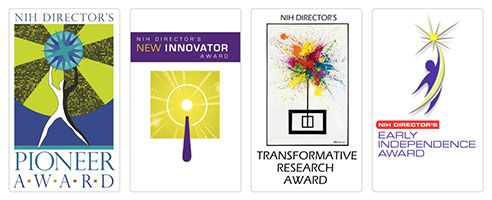
- The NIH Director’s Pioneer Award, established in 2004, challenges investigators at all career levels to pursue new research directions and develop groundbreaking, high-impact approaches to a broad area of biomedical, behavioral, or social science.
- The NIH Director’s New Innovator Award, established in 2007, supports unusually innovative research from early career investigators who are within 10 years of their final degree or clinical residency and have not yet received an NIH R01 or equivalent grant.
- The NIH Director’s Transformative Research Award, established in 2009, promotes cross-cutting, interdisciplinary approaches and supports individuals and teams of investigators who propose research that could potentially establish new or challenge existing paradigms.
- The NIH Director’s Early Independence Award, established in 2011, provides an opportunity for exceptional junior scientists who have recently received their doctoral degree or completed their medical residency to skip traditional post-doctoral training and move immediately into independent research positions.
NIH issued 7 Pioneer Awards, 42 New Innovator Awards, 6 Transformative Research Awards, and 3 Early Independence Awards in 2026. Funding for the awards comes from the NIH Common Fund, the National Institute of Environmental Health Sciences (NIEHS), the National Institute on Deafness and Other Communication Disorders (NIDCD), and the Office of Research Innovation, Validation, and Application (ORIVA).