NIH Director's Early Independence Award

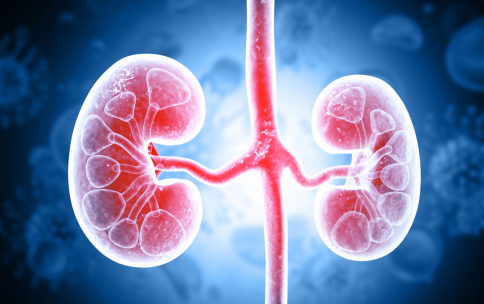
Kidney disease affects approximately one in seven adults, yet the development of new therapeutics has not kept pace with clinical needs. Without adequate treatment, many patients progress to kidney failure where transplantation is the best option, but a global shortage of donor organs has left thousands waiting. Two NIH Director’s High-Risk, High-Reward award recipients are tackling these challenges head-on: Zhongwei Li, Ph.D. from the University of Southern California is advancing therapeutic discovery through a physiologically accurate kidney model, while Haichong Zhang, Ph.D. of Worcester Polytechnic Institute is transforming how doctors evaluate potential donor kidneys using robotic imaging technology. Together, their work addresses critical gaps in kidney disease research and care, offering innovative solutions that could reshape the future of treatment and transplantation.
A key barrier to developing successful kidney disease treatments has been the lack of a physiologically accurate laboratory model of the human kidney. Several research groups have attempted to make one, but they have not been advanced enough to mirror the kidney’s complex structure or reproduce the kidney’s function. Dr. Li, recipient of the NIH Director’s New Innovator Award – along with NIH Director’s Transformative Research Award recipient Andrew McMahon, Ph.D. – spearheaded a new approach. Dr. Li’s research group developed a new lab-grown structure called a kidney progenitor assembloid (KPA). This model closely mimics how the kidney’s functional units – called nephrons – form and develop. Importantly, the KPA model also reproduces several aspects of human kidney function like reabsorption and secretion. This new platform could help researchers understand kidney development, study disease progression, and test potential therapies in realistic biological conditions.
Improving the success of kidney transplantations is also critical for treating kidney disease. Determining whether kidneys from deceased donors are suitable for transplant is often unreliable, leading many viable kidneys to be discarded, worsening the global organ shortage. This is largely due to technical limitations in standard methods of donor kidney evaluation. While cross-sectional imaging technologies could improve kidney screening, their imaging range is too small to capture an entire human kidney with necessary resolution. Work from Dr. Zhang’s lab, recipient of the NIH Director's Early Independence Award, introduces key modifications to existing imaging technologies that address this limitation. Using robotics, the research group developed a system that not only captures images across a larger field-of-view, but also continuously optimizes the position of the imaging probe based on real-time feedback from each captured image. This approach results in high-resolution images with consistent quality that can be combined to fully visualize the kidney and offers a powerful upgrade from existing imaging or biopsy-based methods of transplant assessment. By creating a faster and more effective way to tell which kidneys are healthy, this system could help minimize the number of viable organs that are discarded, expanding access to life-saving transplants.
By tackling two of the most pressing challenges in kidney care, Dr. Li’s and Dr. Zhang’s research offers new hope for patients. Their groundbreaking work has the potential to unlock new therapies, improve transplant outcomes, and ultimately save more lives.
Huang, B., Medina, P., He, J., … Li, Z. Spatially patterned kidney assembloids recapitulate progenitor self-assembly and enable high-fidelity in vivo disease modeling. Cell Stem Cell. 32, 1614-1633.e13 (2025).
Ma, X., Moradi, M., Ma, X., Tang, Q., Levi, M., Chen, Y., Zhang, H.K. Large area kidney imaging for pre-transplant evaluation using real-time robotic optical coherence tomography. Communications Engineering, 3, (2024).